Portable Water Filter Guide: Straw, Gravity, 12V
PortaWell Admin
Author
What a portable water filter is for
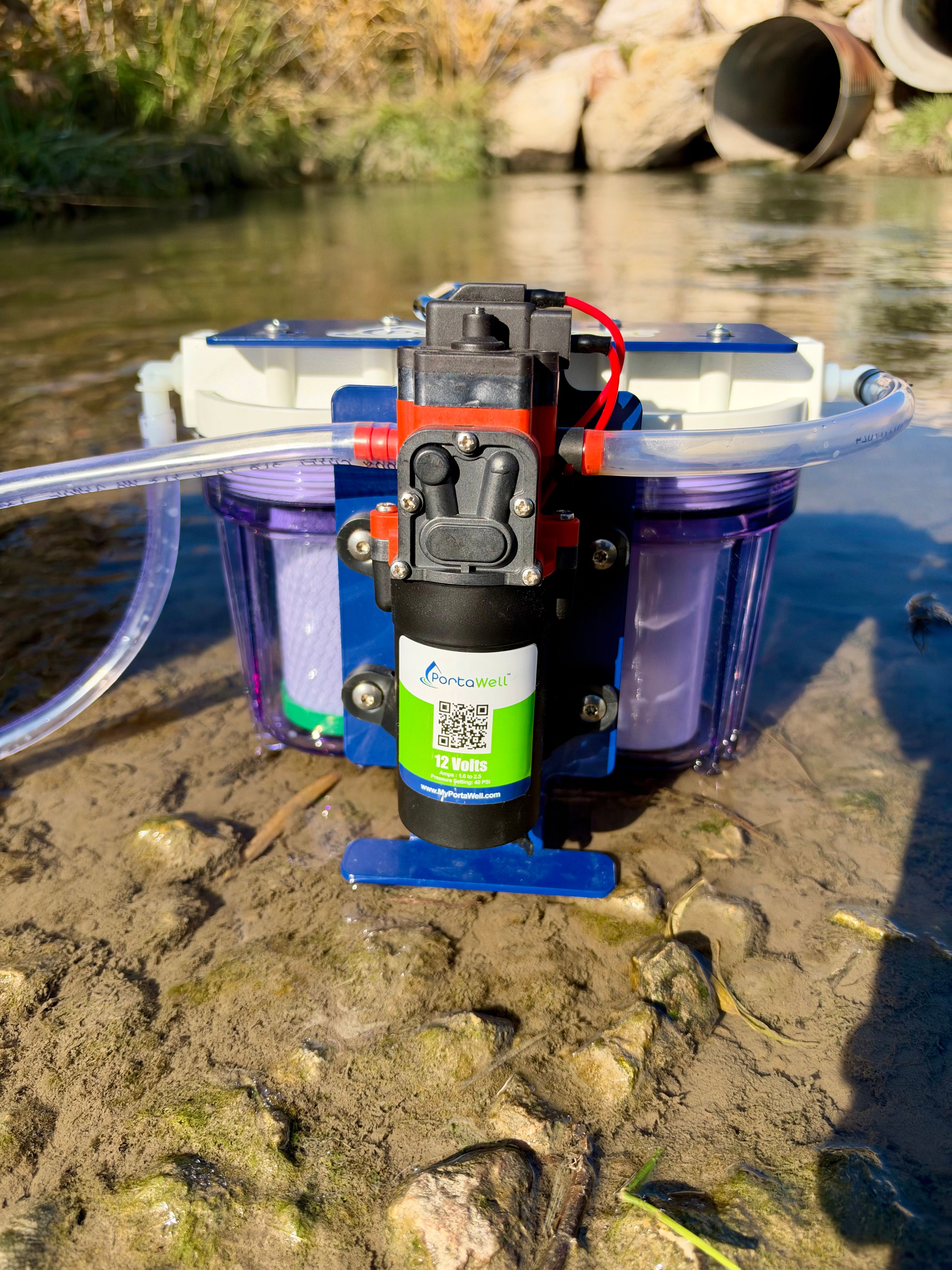
A portable water filter is the tool you carry to water when the tap is not there. PortaWell was created so one person can safely make that water when it is not always available, in enough volume to share with the people around them, at camp or after a disruption.
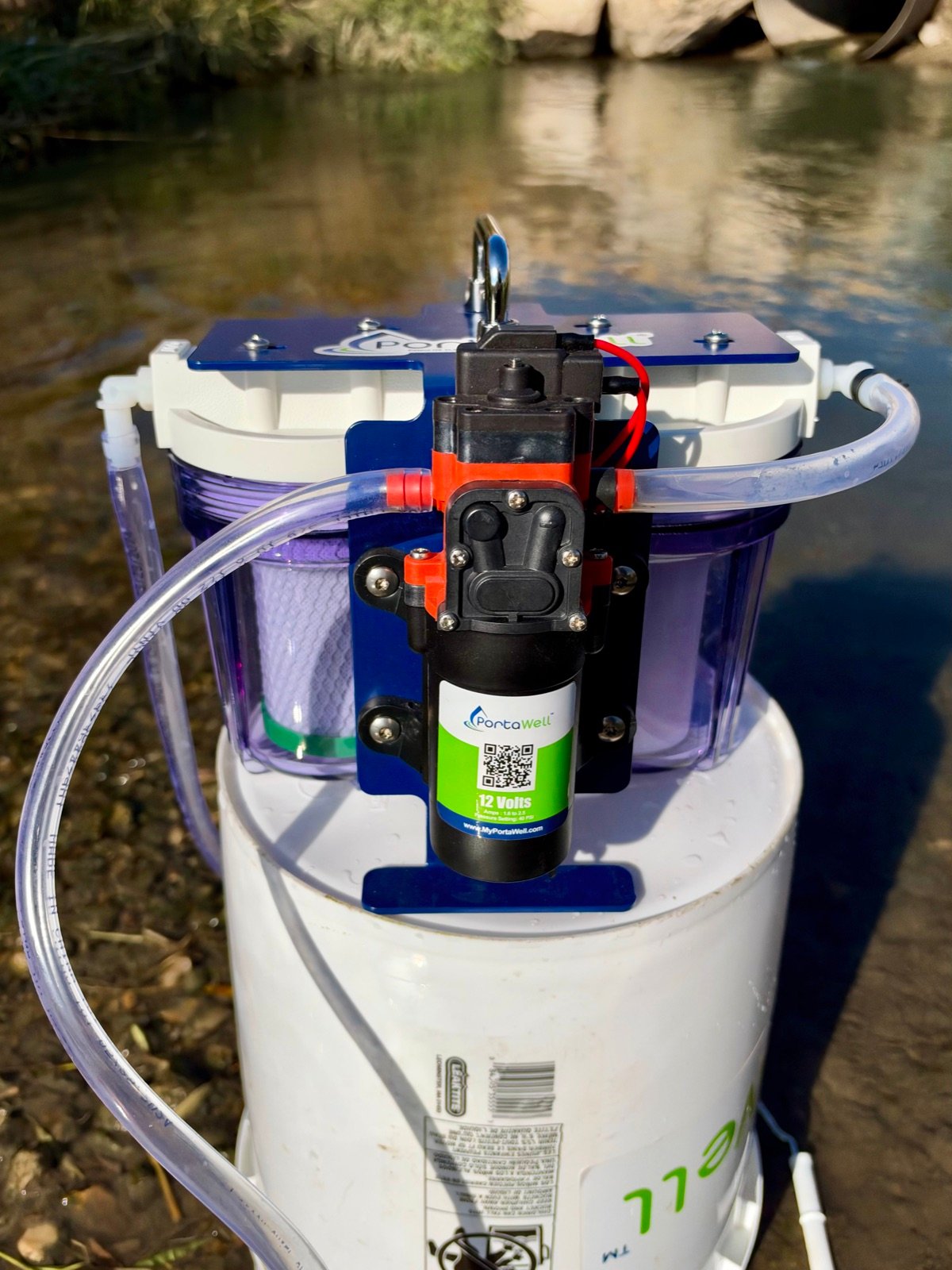
A PortaWell on a bucket at a creek, set up so one person can fill containers others can carry.
"Safely" is the whole process, not a switch on the pump. Settle the dirt, run it through the right cartridges, and boil or disinfect when the source calls for it. The small 12-volt system is what makes the volume easy and quick. A straw feeds the person holding it. A system that fills jugs lets that person hand water to someone else.
The CDC page on treating water while hiking, camping, or traveling is the health frame under every category below. If you are not sure water is safe to drink, treat it. Boiling kills germs most reliably. The next best option is to filter, then disinfect. Most portable filters do not reliably remove viruses. Boiling and disinfection do not remove harmful chemicals. When those are the problem, use a different source. Being ready means knowing that before the day you need the water.
Ready before the day you need it
The useful day is not the day you shop. It is the evening the power is out, or the morning the camp spigot is dry, and other people are looking at the same empty containers you are. A person who already owns a small system, a 12-volt source, and a few clean jugs can start filling them. That is how one filter becomes shared water. You are not passing a mouthpiece around. You are filling something another person can carry to a tent, a neighbor, or a kitchen.
Three questions tell you whether you are actually ready.
How much water, and who else needs it? One person on a day hike needs ounces. A campsite, a family, or a household in an outage needs gallons, and often needs them for people who will not be standing at the filter. A tool that is pleasant for a bottle becomes a chore at 20 gallons, and it cannot be in two places at once.
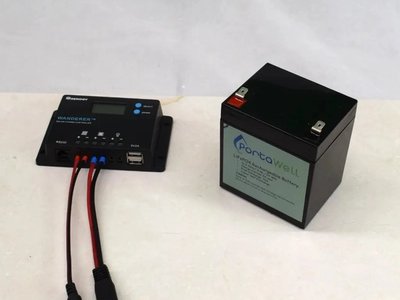
What power will you have when the grid is the thing that failed? Gravity and a hand pump need no outlet. A pumped system needs 12 volts from a battery, a power station, or a vehicle. Solar helps by charging that battery. If the plan depends on a wall outlet, it is not a plan for the outage.
What is in the water you will actually use? Mud is a sediment problem. Protozoa and bacteria are a fine-filter problem, with disinfection still in the plan for viruses. Salt, fuel, and many pool chemicals stay dissolved. Clear water can still be risky. The CDC says germs are not something you can see. Pick the cleaner source you can reach, then treat it.
Straw and squeeze filters
Best for: one person, a bottle, and a pack that has to stay light.
A straw or squeeze filter lets you drink as you go. It is a real portable filter for drinking water, and it belongs in a daypack. It asks for no battery.
It is a drinking rate, not a sharing rate. Filling jugs for other people means minutes of squeezing per gallon, and muddy water clogs a small element quickly. Carry one for the hike. When the job is a camp or a household, this is the spare in the pocket, not the system you were counting on.
Gravity bags and gravity crocks
Best for: camp and countertop water you can pour in and come back to, when it is already fairly clear.
A gravity bag or a crock needs no power. That quiet pace fits a kitchen, or a camp where someone can wait. Many families keep one for stored water at home and still want a faster tool outside.
Flow depends on height, clogging, and how dirty the source is. Mud slows gravity to a drip. Filling a tank for a group this way takes the afternoon. Read the maker's current flow claims yourself. PortaWell's gravity comparison covers crocks next to a powered system, including when keeping both is reasonable.
Hand-pump filters
Best for: a place with no electrical power at all, if you can trade arm time for a few liters.
A hand pump sits between a squeeze bottle and a motor. You can move more water than a straw, and you are the motor. A household's water, or a round of jugs for other people, is a long session. Cold hands and a silty creek show up as fatigue.
The PortaWell Mini is not a hand pump. It is 12-volt only. If you will have no 12-volt source, buy a no-power filter on purpose. Virus protection, in every category here, is still a following boil or disinfectant. The CDC is plain about that.
Why a small 12-volt system fits that job
Best for: the person who wants to make water in volume, quickly, and hand it to other people. Camp, a cabin, a rig, or a house after a disruption.
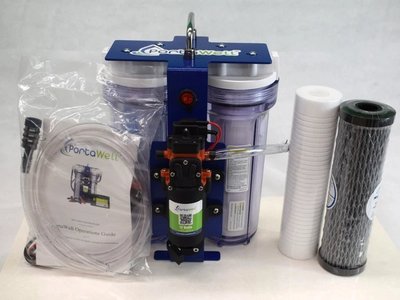
This is the reason a pump belongs in a preparedness kit. A small diaphragm pump pulls water through the housings and sends it out a hose into a jug, a cooler, or a tank. You set it up once. You do not squeeze, and you do not pump with your arm until you quit. At about a gallon a minute, 20 gallons is about 20 minutes of run time and 40 gallons is about 40 minutes, plus setup and settling. That is fast enough that one person can fill what a group will drink and cook with, then go back to the rest of the work.
Easy matters as much as fast. The system is small enough to live on a bucket beside the source. The power draw is under 35 watts, so a battery, a power station, or a vehicle outlet can run it when the house cannot. The powering guide compares those sources. Solar belongs in the plan as a way to recharge the battery. Other voltages are outside the design.
Sharing is what the speed is for. A neighbor, a campsite, or a household does not gather around one straw. They take a full container and leave. The person running the filter stays at the water and keeps filling. That is a different kind of readiness from owning a filter you can drink from yourself.
Turbid water still has to settle first. A sediment cartridge ahead of the fine cartridge is what keeps that pace alive. The particulate guide and the flow guide cover cloudy water and a pump that has slowed down. The five-step surface-water process is the sequence around the pump: choose a source, collect cleanly, settle, filter, store clean, and only then hand the container to someone else.
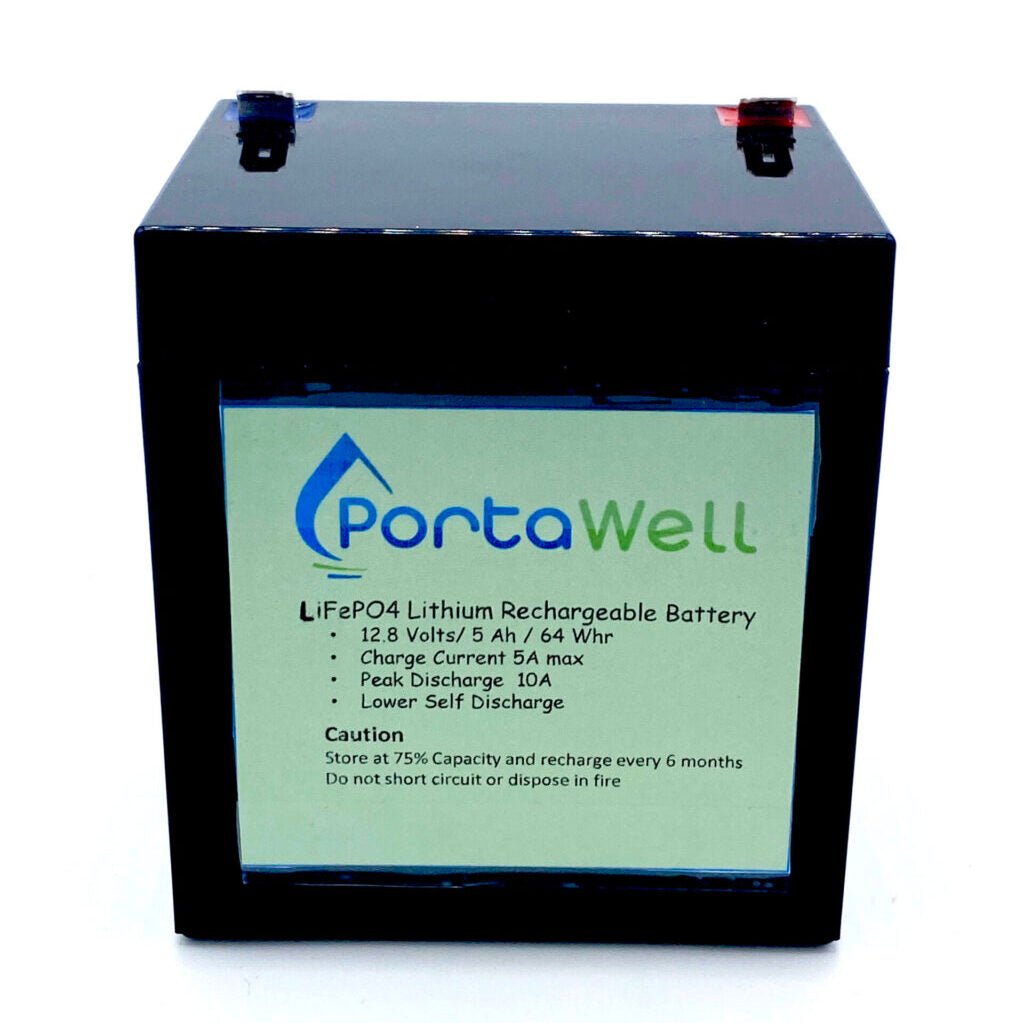
12V systems need a battery, power station, or vehicle outlet.
What you still handle, so the water is fit to share
Viruses, unless you disinfect or boil afterward. The CDC is direct: most portable filters do not reliably remove viruses. A label of 1 micron or smaller, or an NSF 53 or 58 cyst claim, is how the CDC describes parasite reduction. A pore size of 0.3 micron or smaller is how the CDC describes removal of bacteria and parasites, still not viruses. The CDC lists reverse osmosis separately, including for salt. A typical portable cartridge is not an RO membrane. After you filter questionable water, boil it or disinfect it. Boil clear water for one minute at a rolling boil, or three minutes above 6,500 feet. Chemical options and bleach procedure are on the EPA emergency disinfection page and in PortaWell's chlorine treatment article.
Salt. Brackish water, a saltwater pool, and the ocean stay salty through straw, gravity, hand-pump, and standard 12-volt cartridge systems. Desalination means reverse osmosis or distillation.
Many dissolved chemicals. Fuel, solvents, pesticides, metals, and pool cyanuric acid are not a sediment problem. Some carbon and specialty media reduce specific chemicals. The reduction depends on the cartridge, the chemical, and the contact time. A two-stage particulate setup does not cover that list. On PortaWell, the chemical cartridges sold for this are 10-inch: an activated carbon block and AquaMetix. The comparison is in carbon vs AquaMetix. If the water is obviously a chemical waste, skip it. The CDC says you cannot boil or disinfect that kind of contamination into drinking water.
A clear look. Treat water you are unsure of. Store finished water so it never touches the raw bucket, the raw hose, or dirty hands. The container you hand someone should be as deliberate as the filtering was.
Quick chooser
Category: Straw or squeeze. Volume it fits: One person's bottle. Power: None. Turbid water: Clogs quickly. Group or tank use: Poor fit
Category: Gravity bag or crock. Volume it fits: Camp meals, countertop daily use. Power: None. Turbid water: Slows to a drip; pre-settle. Group or tank use: Fine if you can wait
Category: Hand pump. Volume it fits: Personal up to a small group. Power: Your arm. Turbid water: Better with a prefilter; still tiring. Group or tank use: Limited by fatigue
Category: 12V pumped system. Volume it fits: Jugs and small tanks, tens of gallons. Power: 12V battery, power station, or vehicle. Turbid water: Sediment stage helps; still settle first. Group or tank use: Fills containers you can share
A straw is the right tool on a ridgeline. A gravity crock is the right tool on a kitchen counter. A 12-volt pump is the tool when the goal is stored gallons you can share before dark.
Match the cartridge to the water
PortaWell housings take standard, commercially available cartridges. They are ordinary open-both-ends filters, 10-inch on the larger systems and 5-inch on the Mini, so you can set the combination for the water you actually have. The filter guide is the longer version of this.

Sediment. Dirt, silt, and debris.
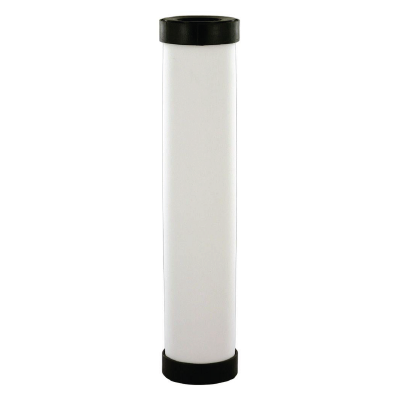
Ceramic. Bacteria and protozoa.
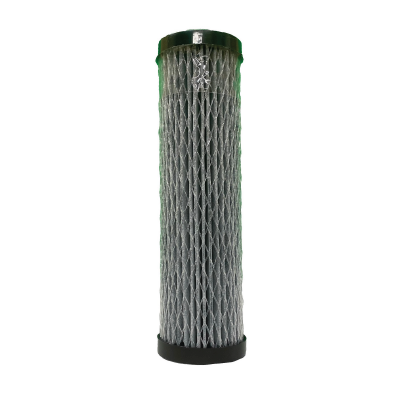
NanoCeram. Bacteria and protozoa.
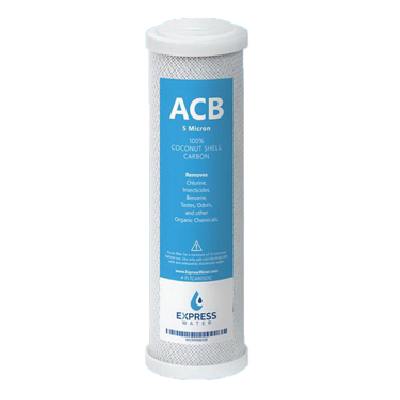
Carbon block. Chlorine and many chemicals.
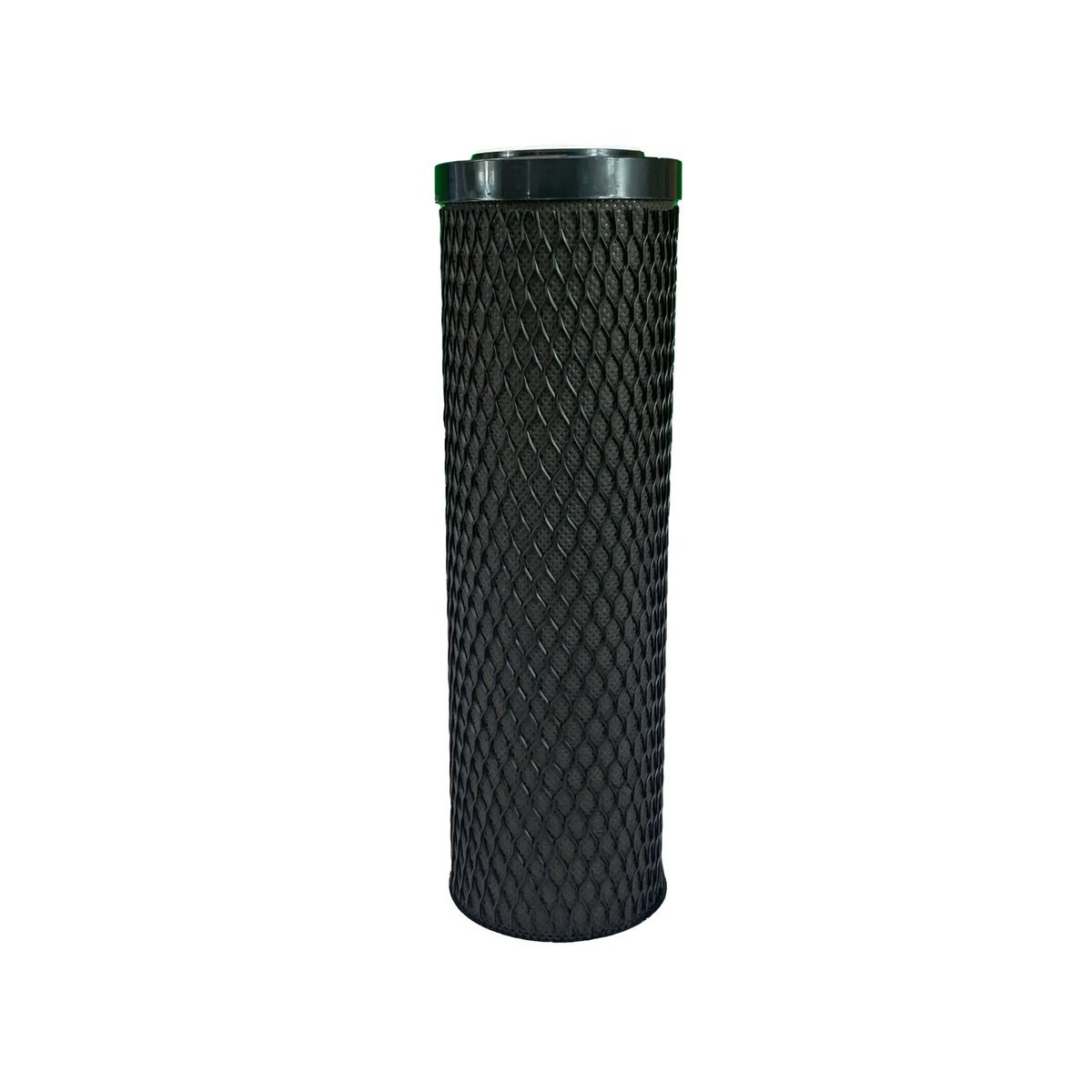
AquaMetix. Broader chemicals and metals.
Sediment takes dirt, silt, and debris. Ceramic and NanoCeram are the fine stage for bacteria and protozoa such as Giardia and Cryptosporidium. A carbon block is for chlorine and many organic chemicals. AquaMetix, on a 10-inch system, is the broader option for chemicals and metals. The carbon and AquaMetix comparison covers that last choice.
Those stages do not finish every water problem. Most portable filters do not reliably remove viruses, so boil or disinfect when that is the concern. Salt stays dissolved. A sediment plus NanoCeram pair does not remove most dissolved chemicals. Carbon and AquaMetix are how a 10-inch PortaWell takes on that part of the job.
The NanoCeram cartridge is NSF/ANSI 42 and 53 certified. The PortaWell system is not. Cartridges are third-party. The ceramic line is imported, and NanoCeram is made by Argonide. The systems are designed, fabricated, and assembled in the United States.
Which PortaWell, depending on your needs
The line is one 12-volt pump idea, about a gallon a minute, drawing under 35 watts. A battery is not included. What changes is how many stages you want, and which cartridges you put in them.
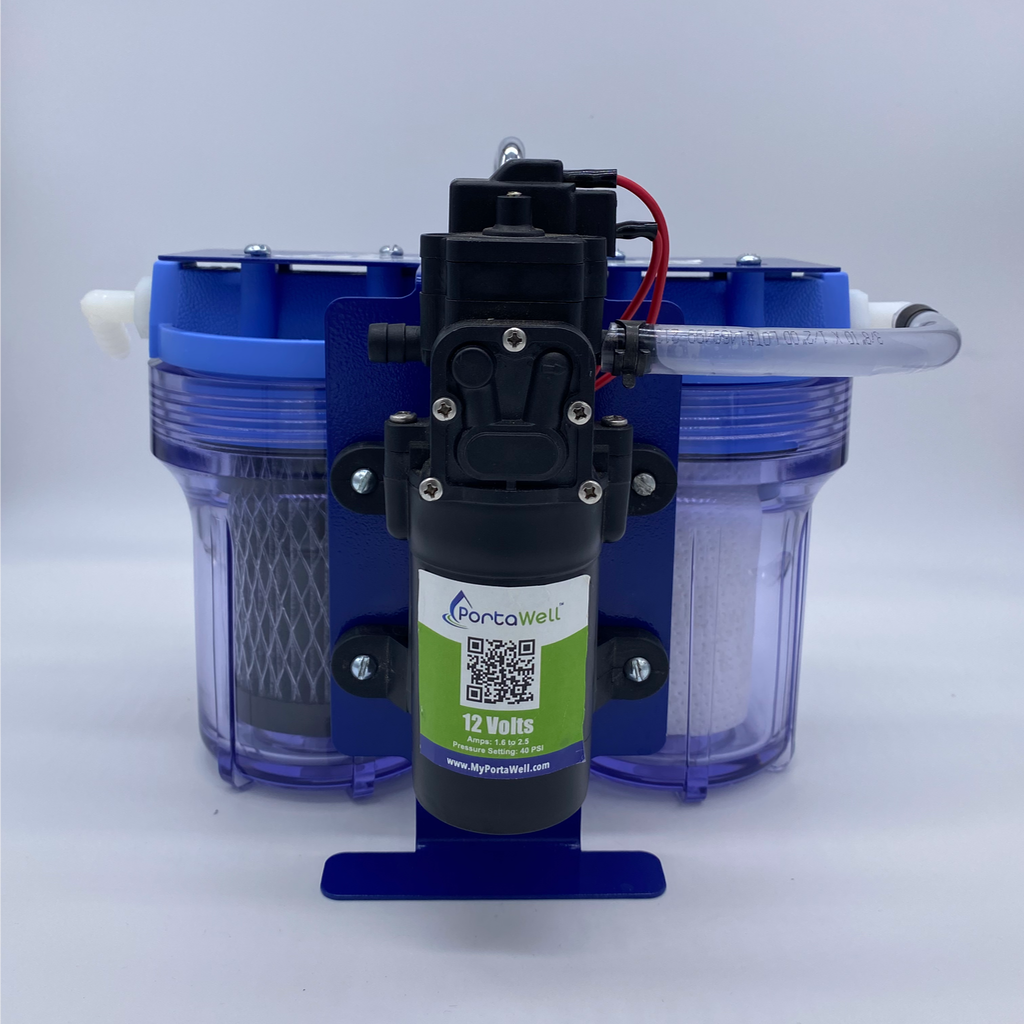
Mini. Two 5-inch stages.
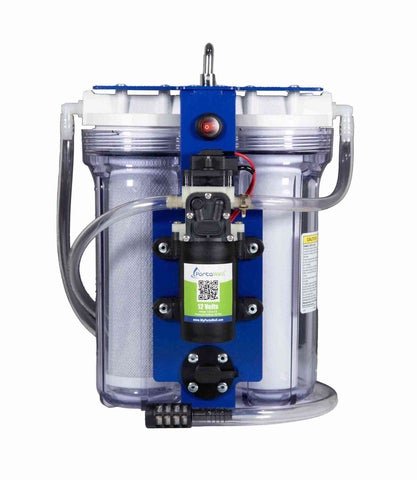
Starter. Two 10-inch stages.
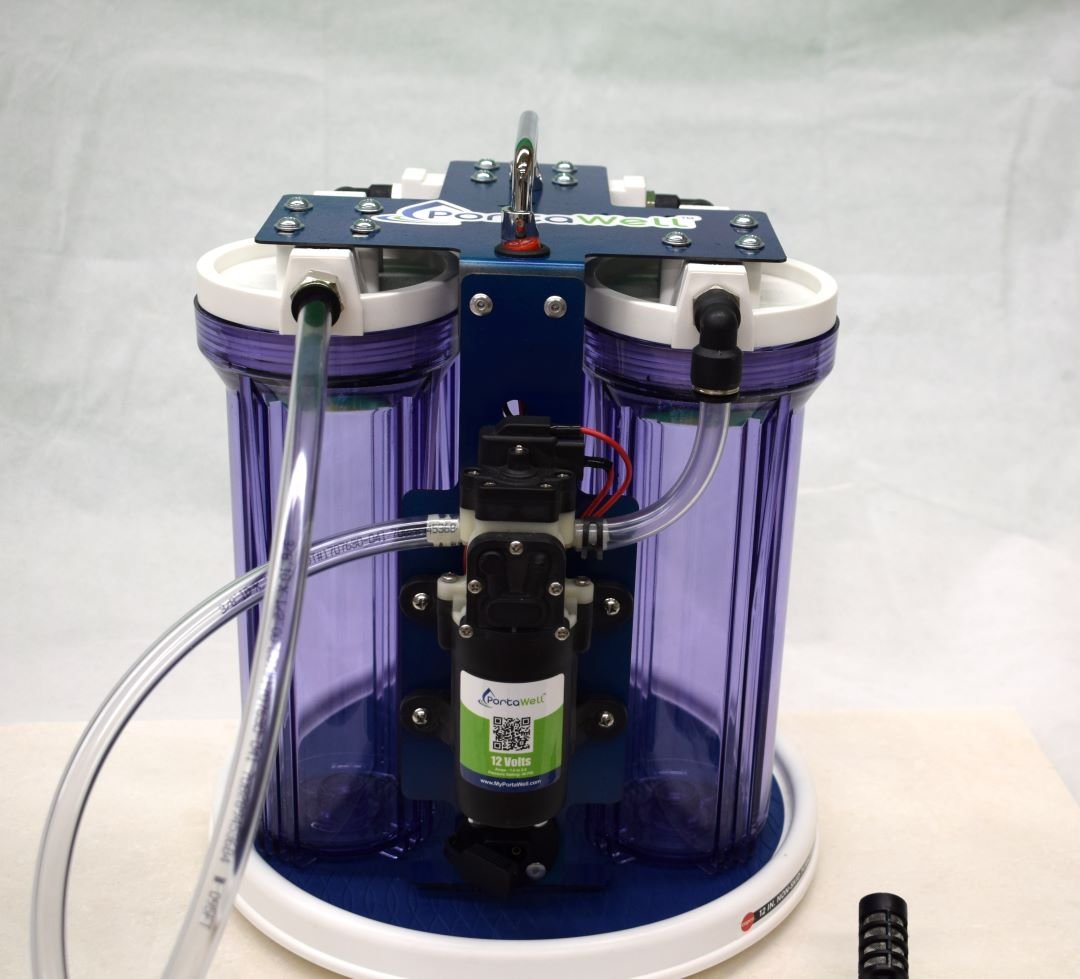
Triple. Three 10-inch stages.
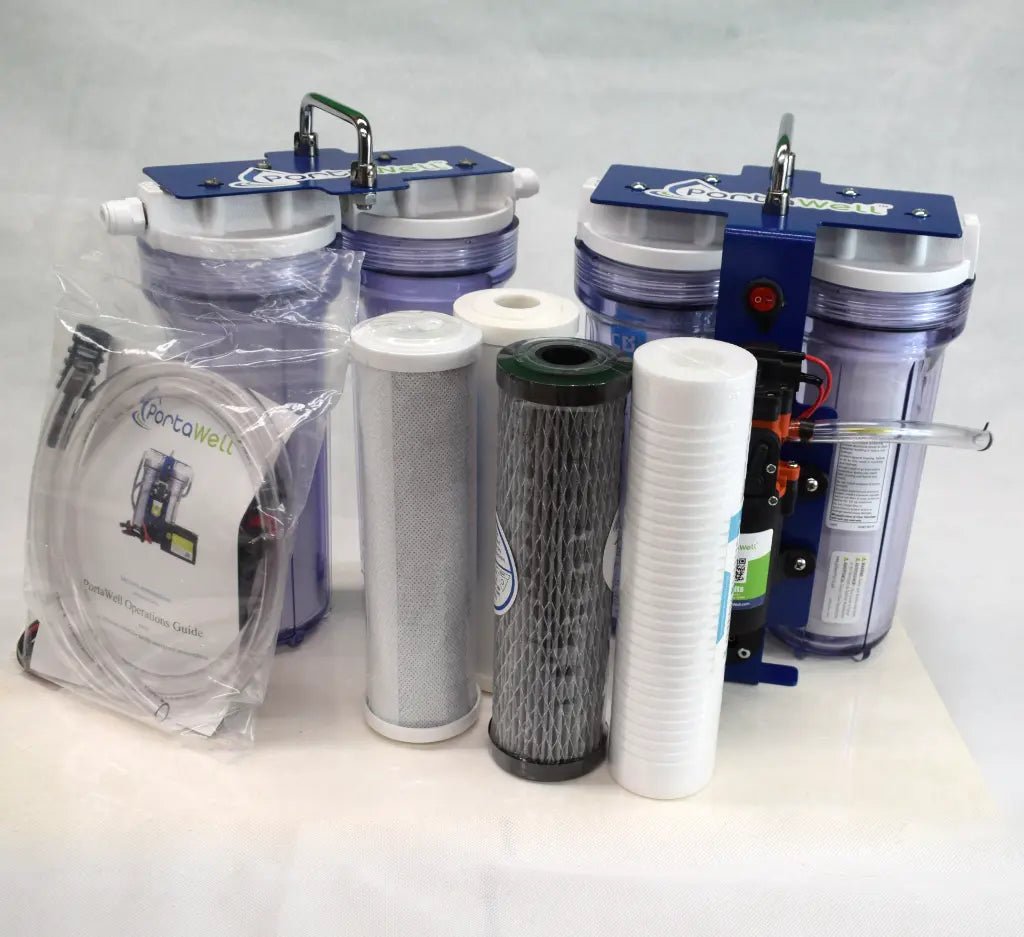
Plus. Four stages in one kit.
- The Mini Expedition is the compact one: 5-inch sediment and NanoCeram. That pair is fixed. It does not take carbon, AquaMetix, or extra housings. Choose it when the job is sediment plus a fine filter, and you want the smallest system.
- The Starter Pak is the 10-inch two-stage system, sediment and NanoCeram, with room to add housings later through the dual-stage expansion. The expansion ships without cartridges, so you choose those for the water.
- The Triple is three 10-inch stages, so a chemical cartridge can run at the same time as the sediment and the fine filter.
- The Plus is the four-stage kit: sediment, ceramic, NanoCeram, and carbon in one pass, when you want both fine-filter types and a chemical stage.
The Mini is the wrong tool for backpacking with no 12-volt source, for salt water, or as a stand-in for boiling or disinfection. It is a strong fit when the water is a two-stage job and you want the small system. When the water needs chlorine or broader chemical reduction, start with a 10-inch system and the cartridges that match. Pool water has extra chemistry rules on the pool emergency page.
Depending on your needs, see the Mini, the Starter Pak, the Triple, or the Plus.
FAQ
What is the best portable water filter for drinking water?
The best match is the one that can make the amount of water you need to share. A straw or squeeze filter fits a personal bottle. A gravity bag or crock fits water you can wait on. A hand pump fits a no-power trip if you can spare the labor. A small 12-volt system fits jugs and tanks when you can supply 12 volts, which is how one person fills containers for other people at camp or after a disruption. Any of them still needs a boil or a disinfectant when viruses are a concern, and none of the standard cartridge types remove salt.
What is a portable water filtration system?
It is a filter you carry to untreated water and use outside a plumbed-in kitchen. The phrase covers a pocket straw and a bucket-sized 12-volt pump with hoses and housings. "System" usually means the pump, housings, hoses, and cartridges together. The cartridges do the contaminant reduction. The pump is what makes a useful volume quick enough for one person to fill containers and share them.
Straw vs gravity vs pump filter — which should I buy?
Buy the straw if the job is one person drinking on the move. Buy gravity if the job is quiet, unpowered batches and you can wait. Buy a hand pump if you need more than a bottle and you will have no electricity. Buy a 12-volt pump if the job is making water quickly enough to share, at camp or when the usual supply stops, and you can power it. Many households keep a bottle filter for hikes and a pumped system ready at home. Those are different days.
Do portable water filters remove viruses?
Most do not, reliably. The CDC says boiling is the best way to kill germs, including viruses, and that the next best option is to filter and then disinfect the filtered water. A fine cartridge is still worth using first, because it addresses parasites that chlorine handles poorly, and it clears the water so disinfection works. Treat virus removal as the disinfection step, not as a promise printed on a portable cartridge.
How fast should a filter be to fill a camp tank?
Work backward from the people you need to supply. At about 1 gallon a minute, a 20-gallon fill is about 20 minutes of run time and a 40-gallon fill is about 40 minutes, before setup and settling. That is the pace of a PortaWell, fast enough to fill containers other people can carry. A straw or a gravity filter works at a much lower pace. If you need more than a few gallons before dark, shop the pumped category and the power that runs it.
PortaWell exists so a person can make water when it is not always available, quickly enough to share. Bottle filters, gravity, and hand pumps are honest tools for a slower or smaller job. Depending on your needs, the Mini, the Starter Pak, the Triple, and the Plus are the same 12-volt idea with different cartridge stacks, and the housings take standard commercially available filters. Have the containers and the 12-volt source before the day you need them. Questions about a setup can go to contact us.